

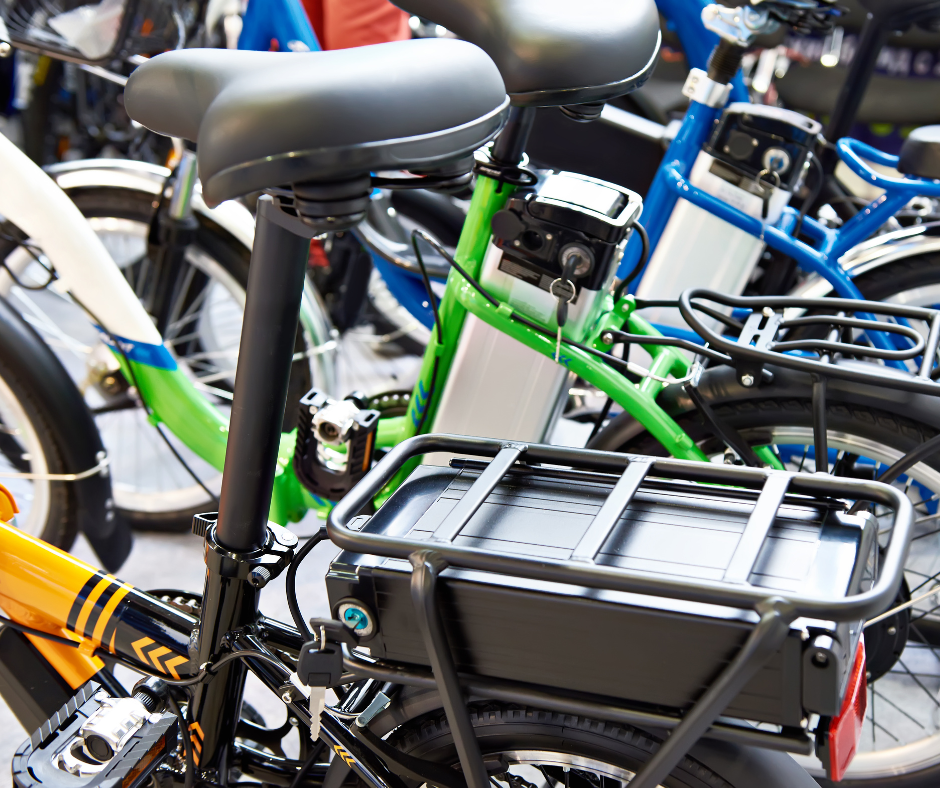
Lithium-ion batteries can be found in a host of devices across your home and workplace.
They’re used in rechargeable devices such as mobile phones, e-bikes, children’s toys and power tools; and Choice Australia estimates that by 2026, in one Australian household alone, there will be an average of 33 items powered by these batteries.
Manufacturers choose lithium-ion batteries as they can be small, have high energy density and have a better power capability than other types.
Why are they risky?
Not only are the chemicals and internal processes within lithium-ion batteries more dangerous than a traditional battery; lots of lithium-ion batteries and chargers imported into the country don’t meet Australian certified standards.
If you’re purchasing a product, you should make sure it’s from a reputable supplier, and check if its battery is lithium-ion.
You can check its contents by looking for labels such as:
- Li-ion
- Li-po
- Lithium polymer
- Lithium-ion
And other variations of “Li”.
How to best use the battery
If you do purchase a product with a lithium-ion battery, it’s important to use it correctly and avoid risk. Lithium-ion batteries can become high-risk through human error.
In 2022, the Australian Competition & Consumer Commission (ACCC) saw a 92% increase in reported lithium-ion incidents, including swelling, overheating and fires.
These incidents can be caused by manufacturing, handling, the way the battery’s stored - or even the way it’s disposed of.
You can help prevent incidents by:
- storing the batteries in cool, dry places out of sunlight
- keeping lithium-ion batteries separate from each other
- purchasing replacement batteries and chargers from the same place as the initial supplier
- allowing the battery to cool after use and before you recharge
- disconnecting products as soon as they are fully charged
- regularly checking the batteries for signs of damage
- using compatible chargers for the batteries
and
- charging these batteries or products on non-combustible surfaces. You may wish to charge large batteries in open spaces such as a garage to avoid flammable home furnishings. It’s also important to charge them in an area with a smoke alarm.
Don’t DIY your battery
The MFS has also reported increased instances of damage from home-made e-bikes and scooters, using conversion kits.
These kits allow users to turn their regular bike or scooter into an electric version. But before you plug in your electric engine, remember the risk may be greater than the reward.
They promise a cheap alternative to purchasing an e-vehicle from the store, but the batteries used within these kits may be dangerous.
If you go for the cheapest option, you may encounter lower capacity, voltage, and longevity as well as a hazardous battery.
Battery disposal
Whether your battery naturally reaches the end of its life or becomes physically damaged, it’s important to properly dispose of it.
You can take your battery to a recycling point at your local supermarket, home renovation store or a battery disposal company. Sometimes the retailer or supplier of the item will even let you return it to them for disposal. Check their website to see if this is an option and for their specific disposal instructions.
If your battery is physically damaged, place it in an insulated plastic bag (such as a lunch bag or cold item shopping bag) before disposal, to make sure that it does not short-circuit and become a fire hazard.
More information:
If you’d like to learn more about lithium-ion batteries, how to use, store and dispose of them, access: